dingqi@web: ~ — zsh

dingqi@web:~$ whoami

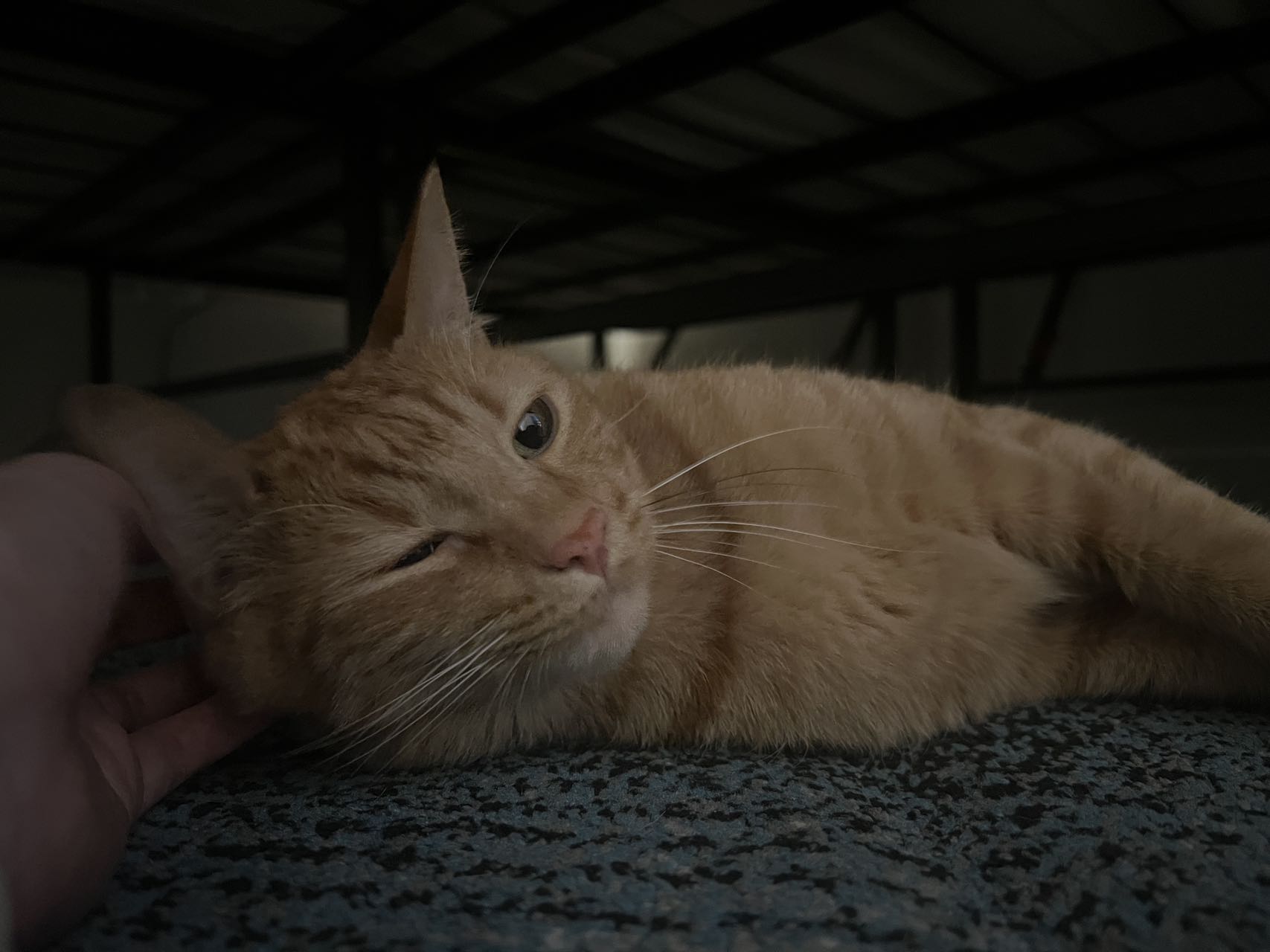
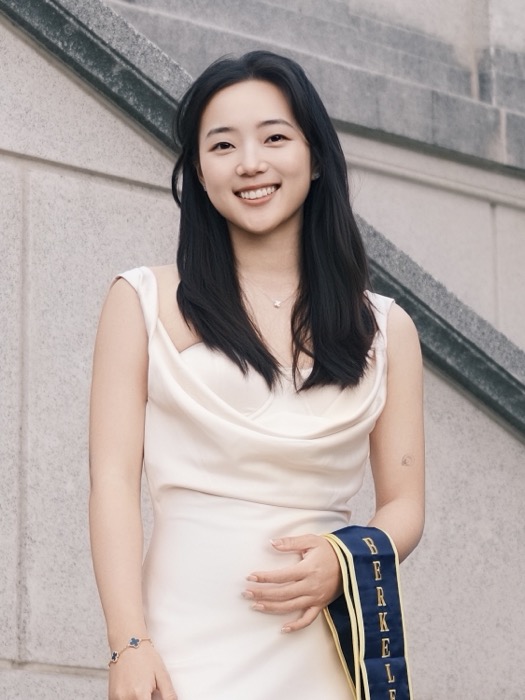
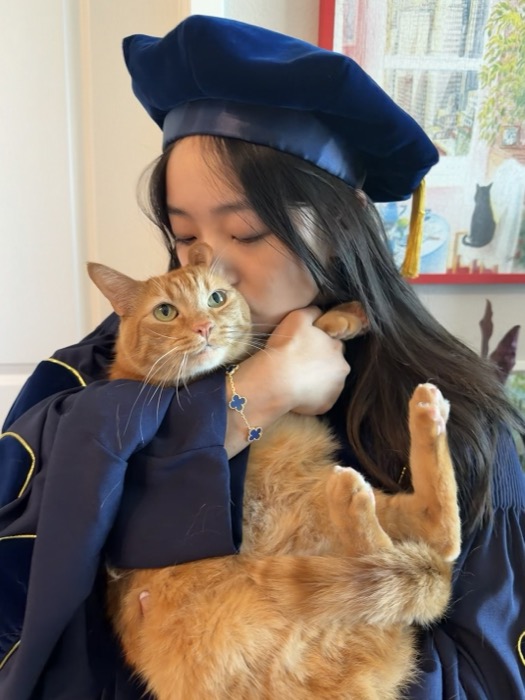
profile photo of Dingqi Zhang Dingqi with her cat 面条
🔊 Dingqi = ding-chee
hover me 🐱

I am a Staff Research Scientist at Multiply Labs, working on dexterous manipulation and loco-manipulation for humanoid. I am interested in bringing adaptive and dynamic motor skills to robots.

I recently completed my PhD at UC Berkeley, where I was advised by Prof. Mark W. Mueller at BAIR while my thesis is about cross-embodiment control via learning.

I have worked closely with Prof. Jitendra Malik and Prof. Antonio Loquercio throughout my PhD. I did my undergrad at Cornell University on autonomous navigation and locomotion with Prof. Andy Ruina. I worked on adaptive dexterous manipulation at Robotics and AI Institute (formally known as Boston Dynamics AI Institute) for Summer 2025 as a research intern.

dingqi@web:~$ cat contact.txt

email[dingqi@berkeley.edu]

cv[CV.pdf]

scholar[Google Scholar]

linkedin[LinkedIn]

dingqi@web:~$ ls -lh ~/research

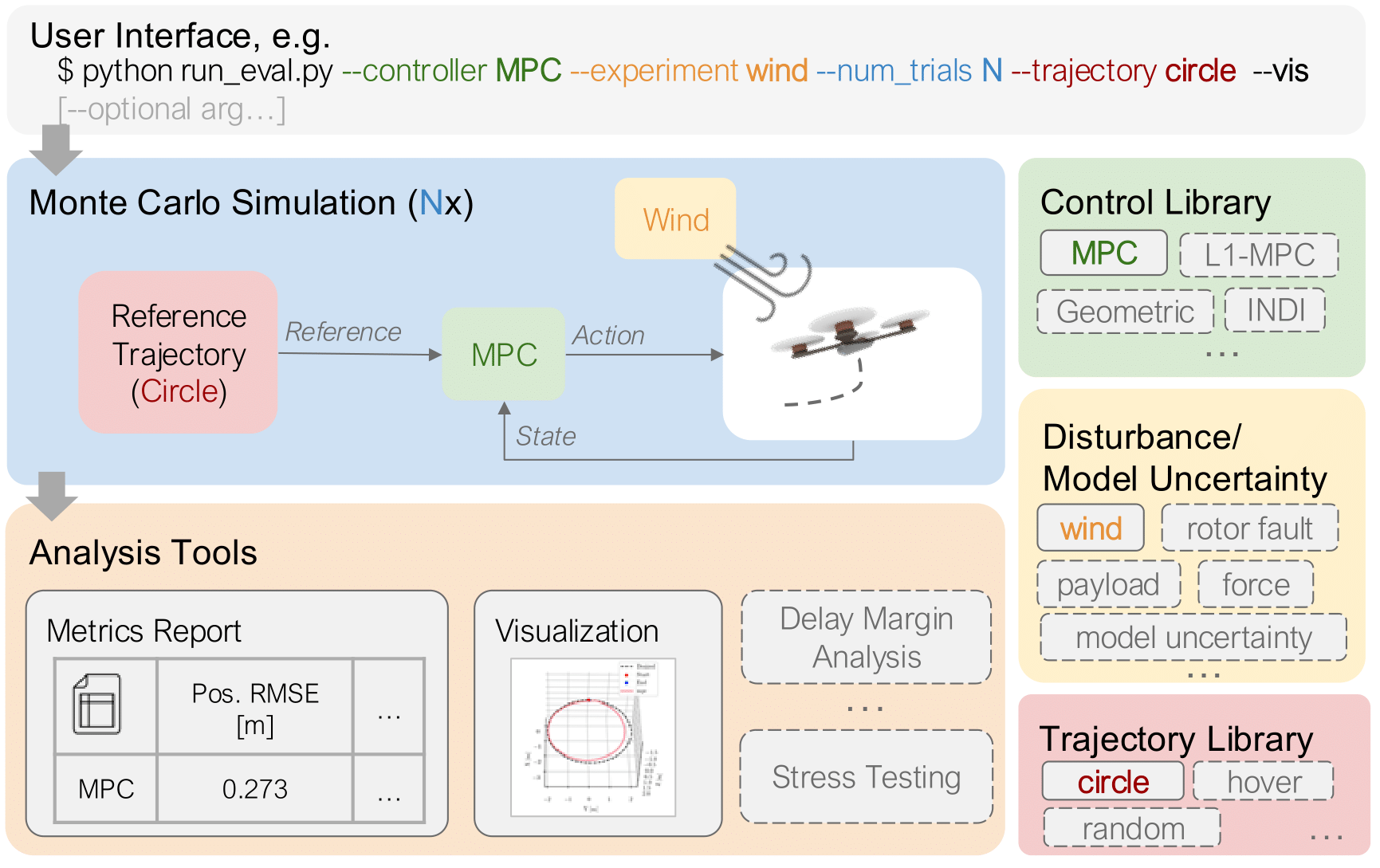
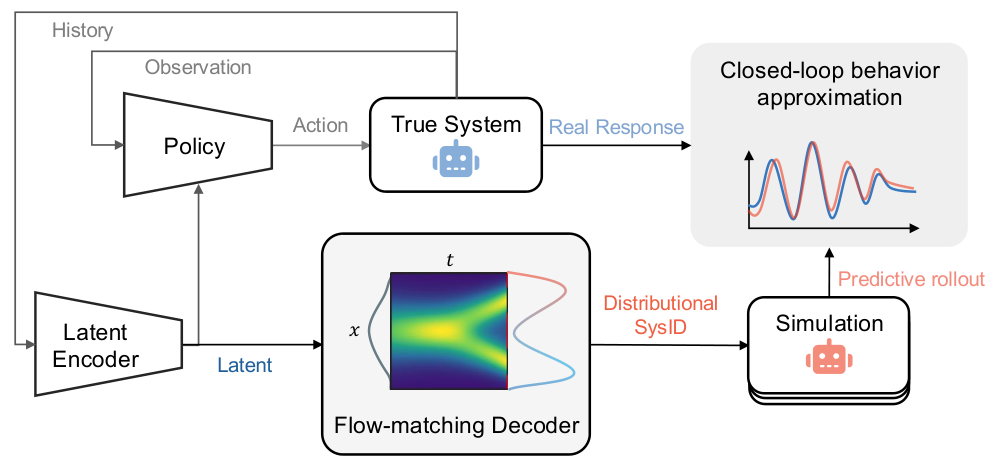
System Overview

A Simulation Evaluation Suite for Robust Adaptive Quadcopter Control

Dingqi Zhang, Ran Tao, Sheng Cheng, Naira Hovakimyan, Mark W. Mueller

American Control Conference (ACC), 2026

code abstract bibtex arXiv

Robust adaptive control methods are essential for maintaining quadcopter performance under external disturbances and model uncertainties. However, fragmented evaluations across tasks, simulators, and implementations hinder systematic comparison of these methods. This paper introduces an easy-to-deploy, modular simulation testbed for quadcopter control, built on RotorPy, that enables evaluation under a wide range of disturbances such as wind, payload shifts, rotor faults, and control latency. The framework includes a library of representative adaptive and non-adaptive controllers and provides task-relevant metrics to assess tracking accuracy and robustness. The unified modular environment enables reproducible evaluation across control methods and eliminates redundant reimplementation of components such as disturbance models, trajectory generators, and analysis tools. We illustrate the testbed's versatility through examples spanning multiple disturbance scenarios and trajectory types, including automated stress testing, to demonstrate its utility for systematic analysis.

@misc{zhang2025simulationevaluationsuite,
  title={A Simulation Evaluation Suite for Robust
     Adaptive Quadcopter Control},
  author={Dingqi Zhang and Ran Tao and Sheng Cheng
     and Naira Hovakimyan and Mark W. Mueller},
  year={2025},
  eprint={2510.03471},
  archivePrefix={arXiv},
  primaryClass={cs.RO},
  url={https://arxiv.org/abs/2510.03471},
}
sym

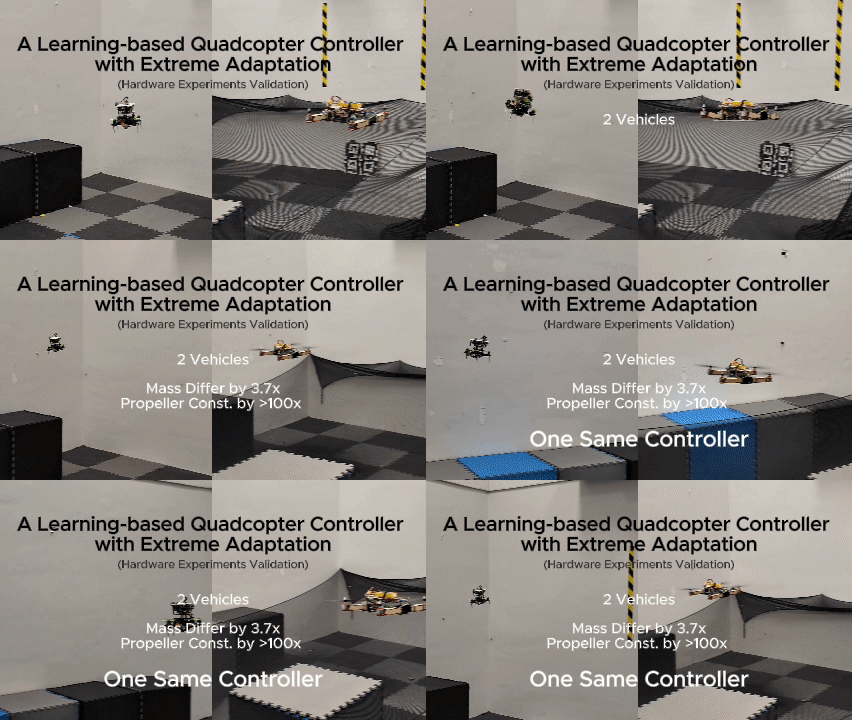
A Learning-based Quadcopter Controller with Extreme Adaptation

Dingqi Zhang, Antonio Loquercio, Jerry Tang, Ting-Hao Wang, Jitendra Malik, Mark W. Mueller

IEEE Transactions on Robotics, 2025

code abstract bibtex arXiv video

This paper introduces a learning-based low-level controller for quadcopters, which adaptively controls quadcopters with significant variations in mass, size, and actuator capabilities. Our approach leverages a combination of imitation learning and reinforcement learning, creating a fast-adapting and general control framework for quadcopters that eliminates the need for precise model estimation or manual tuning. The controller estimates a latent representation of the vehicle's system parameters from sensor-action history, enabling it to adapt swiftly to diverse dynamics. Extensive evaluations in simulation demonstrate the controller's ability to generalize to unseen quadcopter parameters, with an adaptation range up to 16 times broader than the training set. In real-world tests, the controller is successfully deployed on quadcopters with mass differences of 3.7 times and propeller constants varying by more than 100 times, while also showing rapid adaptation to disturbances such as off-center payloads and motor failures. These results highlight the potential of our controller in extreme adaptation to simplify the design process and enhance the reliability of autonomous drone operations in unpredictable environments.

@misc{zhang2024learningbasedquadcoptercontrollerextreme,
  title={A Learning-based Quadcopter Controller
    with Extreme Adaptation},
  author={Dingqi Zhang and Antonio Loquercio
    and Jerry Tang and Ting-Hao Wang
    and Jitendra Malik and Mark W. Mueller},
  year={2024},
  eprint={2409.12949},
  archivePrefix={arXiv},
  primaryClass={cs.RO},
  url={https://arxiv.org/abs/2409.12949},
}
sym

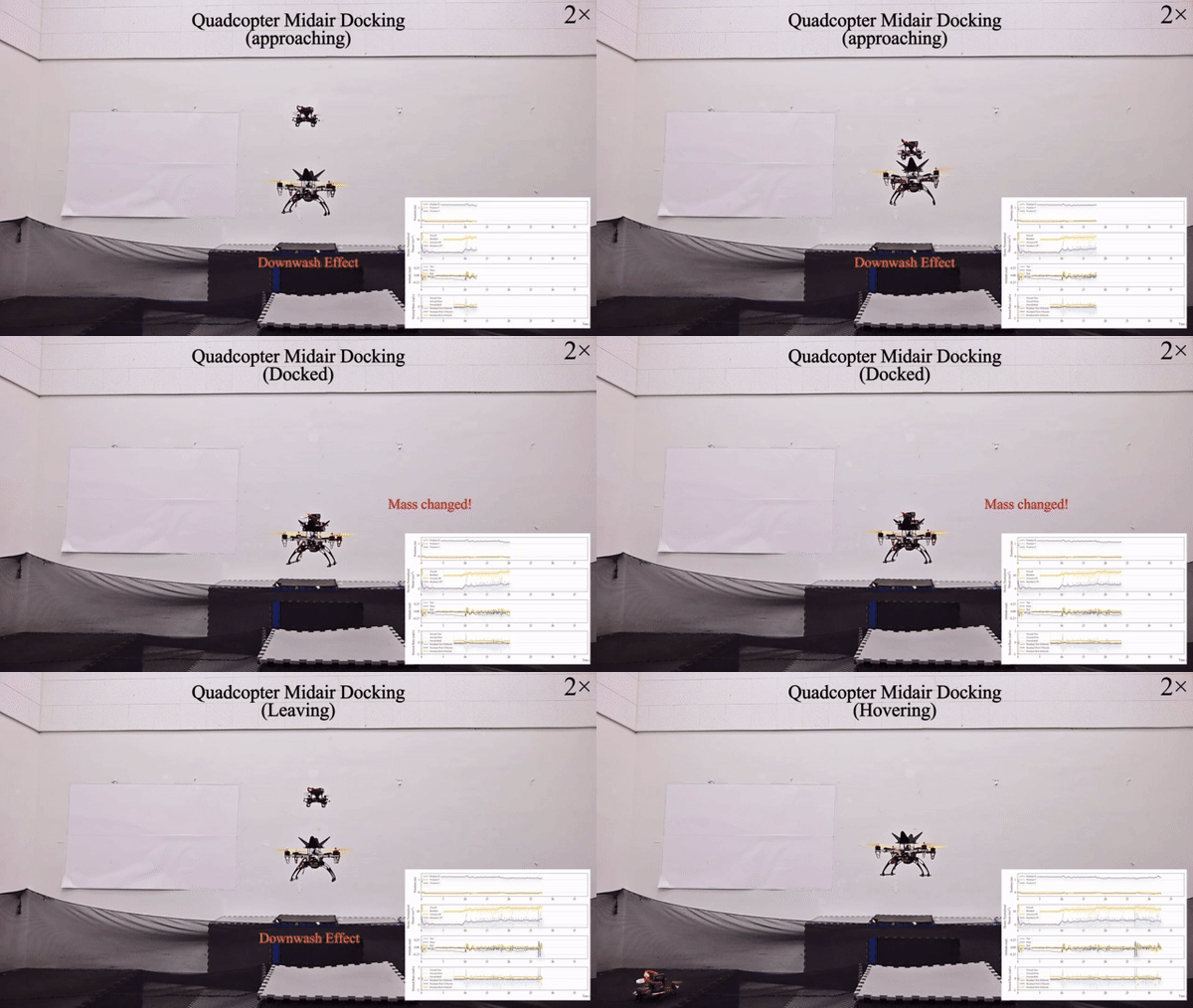
ProxFly: Robust Control for Close Proximity Quadcopter Flight via Residual Reinforcement Learning

Ruiqi Zhang, Dingqi Zhang, Mark W. Mueller

International Conference on Robotics and Automation (ICRA), 2025

abstract bibtex arXiv video

This paper proposes the ProxFly, a residual deep Reinforcement Learning (RL)-based controller for close proximity quadcopter flight. Specifically, we design a residual module on top of a cascaded controller (denoted as basic controller) to generate high-level control commands, which compensate for external disturbances and thrust loss caused by downwash effects from other quadcopters. First, our method takes only the ego state and controllers' commands as inputs and does not rely on any communication between quadcopters, thereby reducing the bandwidth requirement. Through domain randomization, our method relaxes the requirement for accurate system identification and fine-tuned controller parameters, allowing it to adapt to changing system models. Meanwhile, our method not only reduces the proportion of unexplainable signals from the black box in control commands but also enables the RL training to skip the time-consuming exploration from scratch via guidance from the basic controller. We validate the effectiveness of the residual module in the simulation with different proximities. Moreover, we conduct the real close proximity flight test to compare ProxFly with the basic controller and an advanced model-based controller with complex aerodynamic compensation. Finally, we show that ProxFly can be used for challenging quadcopter in-air docking, where two quadcopters fly in extreme proximity, and strong airflow significantly disrupts flight. However, our method can stabilize the quadcopter in this case and accomplish docking.

@misc{zhang2024proxflyrobustcontrolclose,
  title={ProxFly: Robust Control for Close Proximity
    Quadcopter Flight via Residual Reinforcement Learning},
  author={Ruiqi Zhang and Dingqi Zhang and Mark W. Mueller},
  year={2024},
  eprint={2409.13193},
  archivePrefix={arXiv},
  primaryClass={cs.RO},
  url={https://arxiv.org/abs/2409.13193},
}

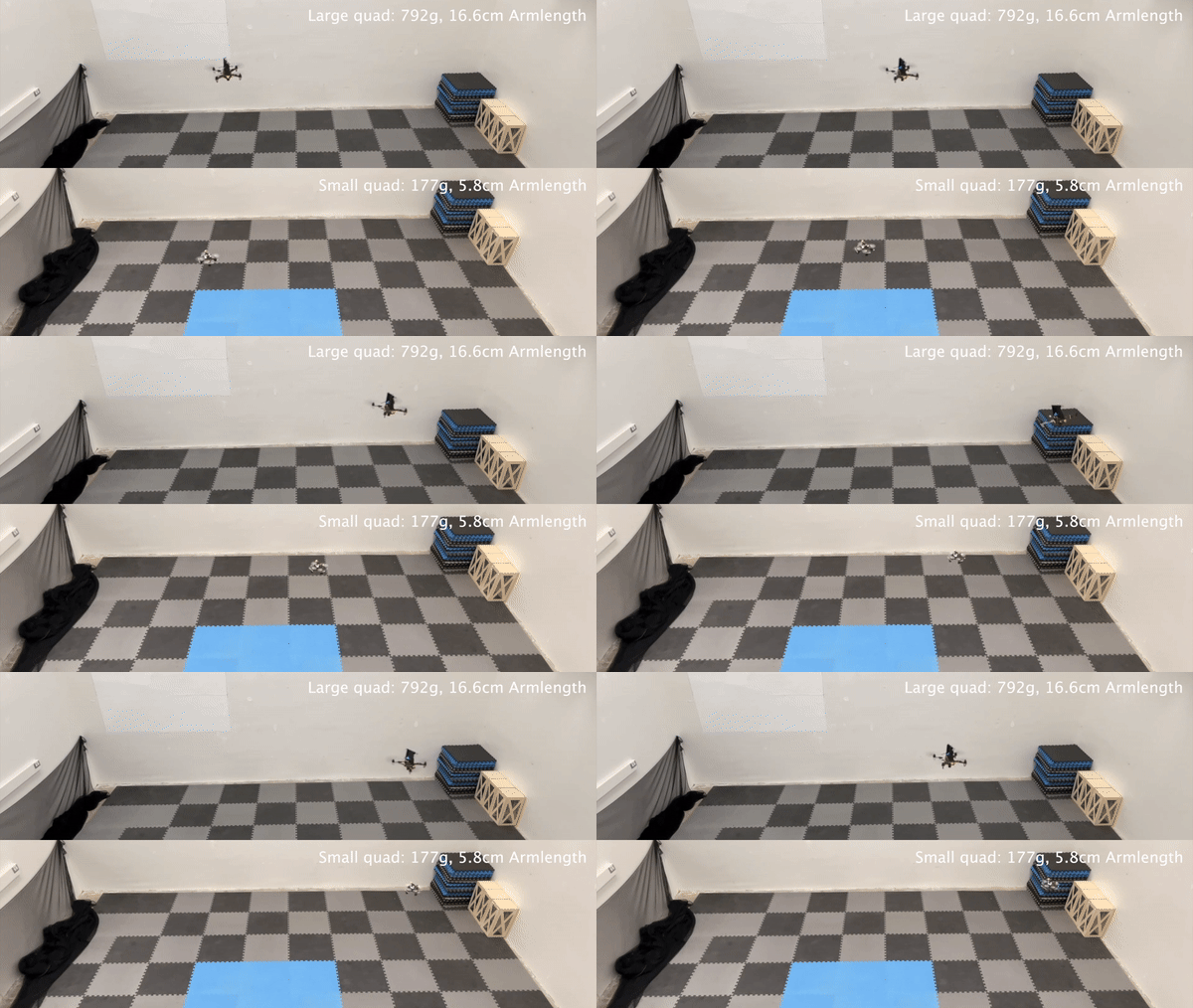
Learning a Single Near-hover Position Controller for Vastly Different Quadcopters

Dingqi Zhang, Antonio Loquercio, Xiangyu Wu, Ashish Kumar, Jitendra Malik, Mark W. Mueller

International Conference on Robotics and Automation (ICRA), 2023

webpage code abstract bibtex arXiv video

This paper proposes an adaptive near-hover position controller for quadcopters, which can be deployed to quadcopters of very different mass, size and motor constants, and also shows rapid adaptation to unknown disturbances during runtime. The core algorithmic idea is to learn a single policy that can adapt online at test time not only to the disturbances applied to the drone, but also to the robot dynamics and hardware in the same framework. We achieve this by training a neural network to estimate a latent representation of the robot and environment parameters, which is used to condition the behaviour of the controller, also represented as a neural network. We train both networks exclusively in simulation with the goal of flying the quadcopters to goal positions and avoiding crashes to the ground. We directly deploy the same controller trained in the simulation without any modifications on two quadcopters in the real world with differences in mass, size, motors, and propellers with mass differing by 4.5 times. In addition, we show rapid adaptation to sudden and large disturbances up to one-third of the mass of the quadcopters. We perform an extensive evaluation in both simulation and the physical world, where we outperform a state-of-the-art learning-based adaptive controller and a traditional PID controller specifically tuned to each platform individually.

@article{zhang2023learning,
  title={Learning a Single Near-hover Position Controller
    for Vastly Different Quadcopters},
  author={Zhang, Dingqi and Loquercio, Antonio and
  Wu, Xiangyu and Kumar, Ashish and
  Malik, Jitendra and Mueller, Mark W},
  journal={arXiv preprint arXiv:2209.09232},
  year={2022}
}

dingqi@web:~$ ls ~/projects

sym

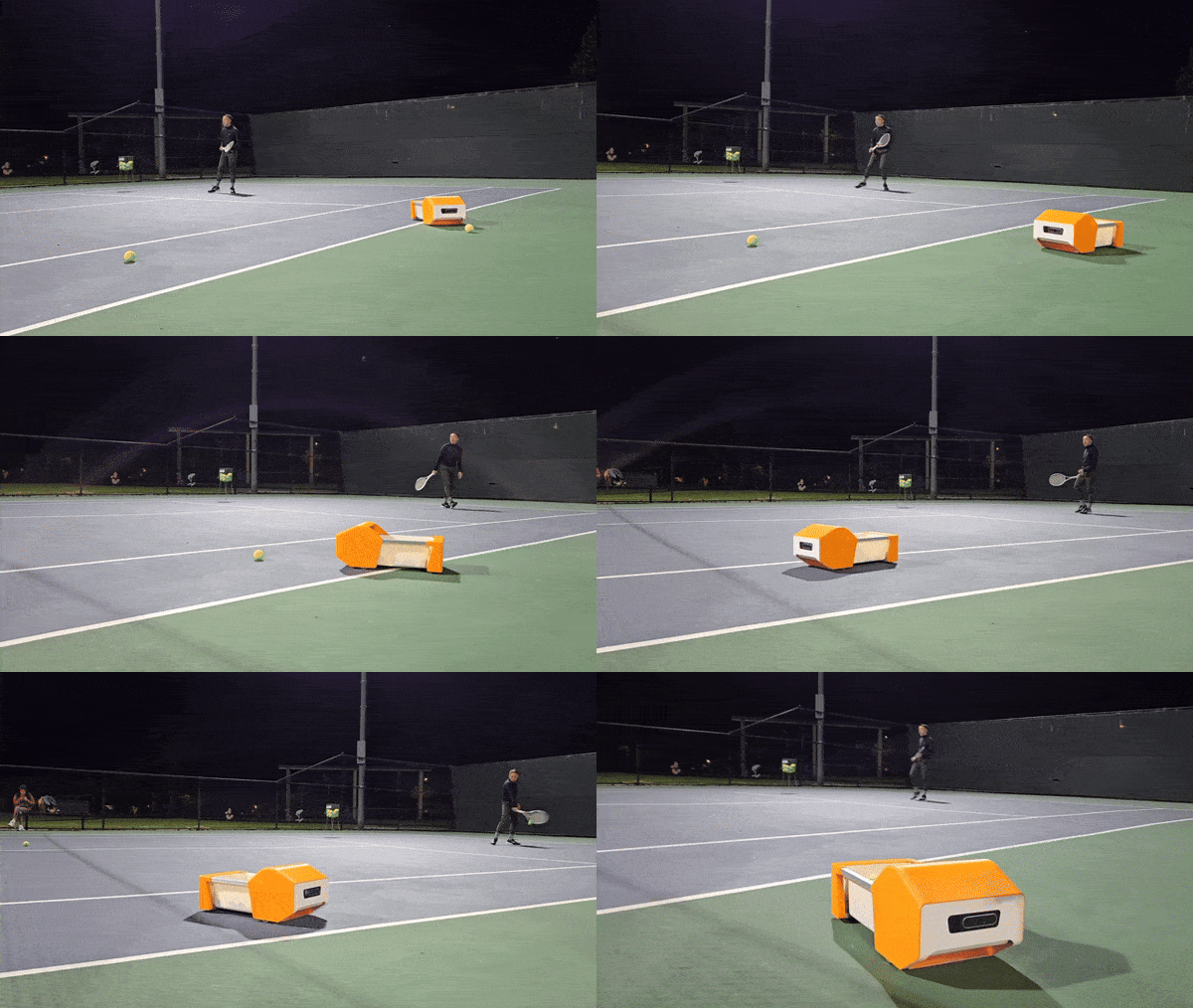
Tennie: An Autonomous Tennis Ball Collector

Dingqi Zhang*, Jerry Tang*

(SP24 Ignite Grant, 3% | FA23 Spark Grant, 9%)

abstract video

Ball collection has always been a laborious and time-consuming work in tennis training. We design Tennie to automate this process, so that players and coaches can dedicate their efforts entirely to skill development. Tennie is a mobile robot that can collect tennis balls autonomously. It is equipped with a roller to collect balls and a cassie platform to move freely. We have built a prototype and demonstrated its functionality. We are currently working on adding vision into the system so that the Tennie can compute optimal paths for maximum collection efficiency based on vision inputs. Our proposal has been selected for Ignite Grant in Spring 2024 and Spark Grant in Fall 2023 by the Jacobs Institute Innovation Catalysts.

dingqi@web:~$ cat ~/personal.md

# in my spare time
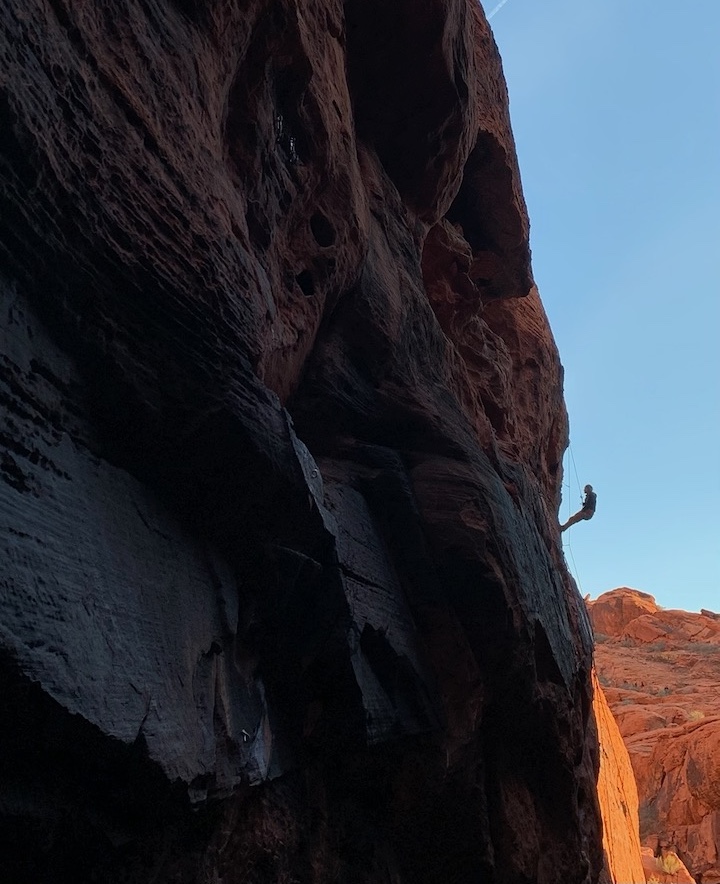
climbing  : Red Rock, Nevada
skiing    : Tahoe, California
tennis    : Berkeley, California

I'm also raising a cat named 面条 ("myan-tyow"), adopted from Berkeley Humane.

dingqi@web:~$

# adapted from Jon Barron & Ashish Kumar · last updated 2026/06/15